
The Receipt
The Cheap Protein Isn't Cheap Anymore
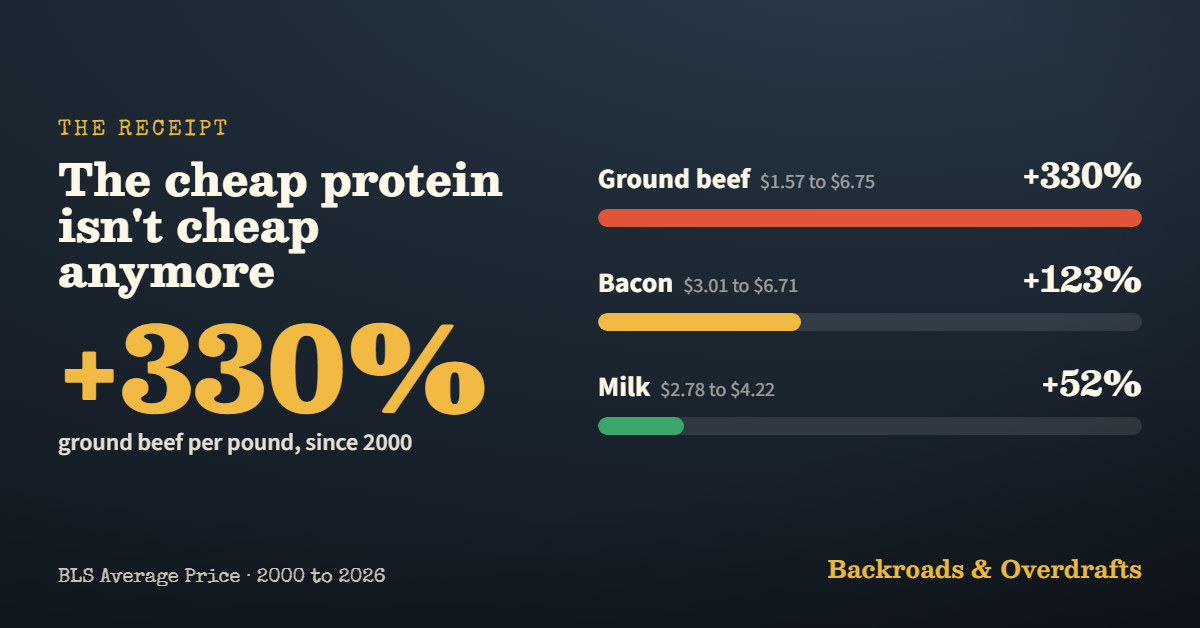
Ground beef was the thing you bought when money was tight. It went from $1.57 a pound in 2000 to $6.75, up 330 percent, and it now takes almost twice the work-minutes to buy.
There used to be a hierarchy at the meat counter, and ground beef sat at the bottom of it in the good way. It was the fallback. The thing you reached for when the budget was tight and the steak was for another week. A pound of it stretched into tacos, into a pot of chili, into a meatloaf that fed everybody twice. It was cheap on purpose, and that was the whole point of it.
That part has quietly stopped being true. Ground beef isn’t the budget move anymore. Neither is bacon. The staples that used to be the answer when money was short have drifted up into the part of the cart you think twice about.
This isn’t one brand or one store. It’s the BLS national average price, the clean line underneath everybody’s receipts.
The numbers behind the feeling
In May 2000, ground beef averaged $1.57 a pound. In May 2026, it averaged $6.75 a pound. That’s a 329.6% jump, more than four times the old price.
Bacon did almost the same thing. It went from $3.01 a pound to $6.71, up 123.3%. The cut you used to throw in for flavor now costs nearly what the beef does.
Milk held up better. A gallon of whole milk went from $2.78 to $4.22, up 51.6%. Still up, but it didn’t run away from you like the meat did. That gap matters, and it’s the part of the story most people feel before they can name it. Not everything rose the same. The cheap proteins rose the hardest.
The part that isn’t just inflation
Everything costs more after 25 years, so the dollar figures alone don’t settle it. The sharper question is how much of your working time a pound of ground beef takes now. Using average hourly earnings for the typical worker, here’s the answer.
| Item | 2000 price | 2026 price | Work-minutes then to now |
|---|---|---|---|
| Ground beef (lb) | $1.57 | $6.75 | about 7 min → about 13 min |
| Milk (gallon) | $2.78 | $4.22 | about 12 min → about 8 min |
This is where it gets honest. Wages did rise over those years, from about $13.74 an hour to $32.23, which is up roughly 135%. Milk got easier to afford in work-time, falling from about 12 minutes a gallon down to 8. That’s the system working the way it’s supposed to.
Ground beef went the other way. It went from about 7 minutes of work a pound to about 13. The paycheck nearly doubled and the cheap protein still outran it. The thing that used to be the budget answer now takes almost twice the labor to put on the table.
Useful source trail: this page uses BLS Average Price Data for the food prices and FRED-hosted average hourly earnings for the work-minute math. The public starting points are BLS CPI data and FRED.
Why it stings more than the number
Part of this is just memory doing its job. You don’t keep a running tally of what the whole cart costs, but you remember what ground beef was for. It was the line item that meant you were being careful. When the careful option costs this much, the careful feeling goes with it, and that’s the part people are actually reacting to.
It’s the same squeeze we keep finding one receipt at a time. The grocery cart as a whole tells the same story in The Same Cart, 1980 to Now. The reason a fixed-income household feels it hardest is laid out in When the COLA Doesn’t Cover the Cart. And if you want one more habit that quietly doubled while you weren’t watching, How Your Coffee Quietly Doubled is the same math in a mug.
The useful protein swap test
The question is not whether ground beef is bad. It is whether the old cheap-protein reflex still fits the receipt in your hand.
Run the shelf like this:
- Compare price per pound, not package price.
- Look at edible yield. Bone, fat, and water all change the real value.
- Count how many meals the package actually stretches into.
- Keep one backup protein that is not trying to be beef: beans, eggs when they are reasonable, lentils, tuna, or chicken thighs on sale.
That last one matters. The cheapest meal is usually not the one with the lowest sticker. It is the one that does not send you back to the store tomorrow.
The caveat
BLS average price data is a national U.S. city average. It isn’t your local store, a specific brand, or a sale tag. We compared the same month, May to May, so seasonal swings don’t tilt it. The work-minutes use national average hourly earnings, so your own wage changes the math. The line runs May 2000 to May 2026.
Still, the direction isn’t subtle. The food that used to mean we’re cutting back is now the food you cut back on.
What was the meal your family always made when money was tight, and would it even be cheap now?
Source: U.S. Bureau of Labor Statistics Average Price Data, national U.S. city average price per pound or gallon. Ground beef 100% beef series APU0000703112, bacon sliced series APU0000704111, whole milk series APU0000709112, comparing May 2000 to May 2026. Work-minutes use FRED AHETPI, average hourly earnings of production and nonsupervisory workers ($13.74/hr in 2000, $32.23/hr in 2026). Pulled 2026-06-11.
Keep reading
More from The Receipt
 The Receipt
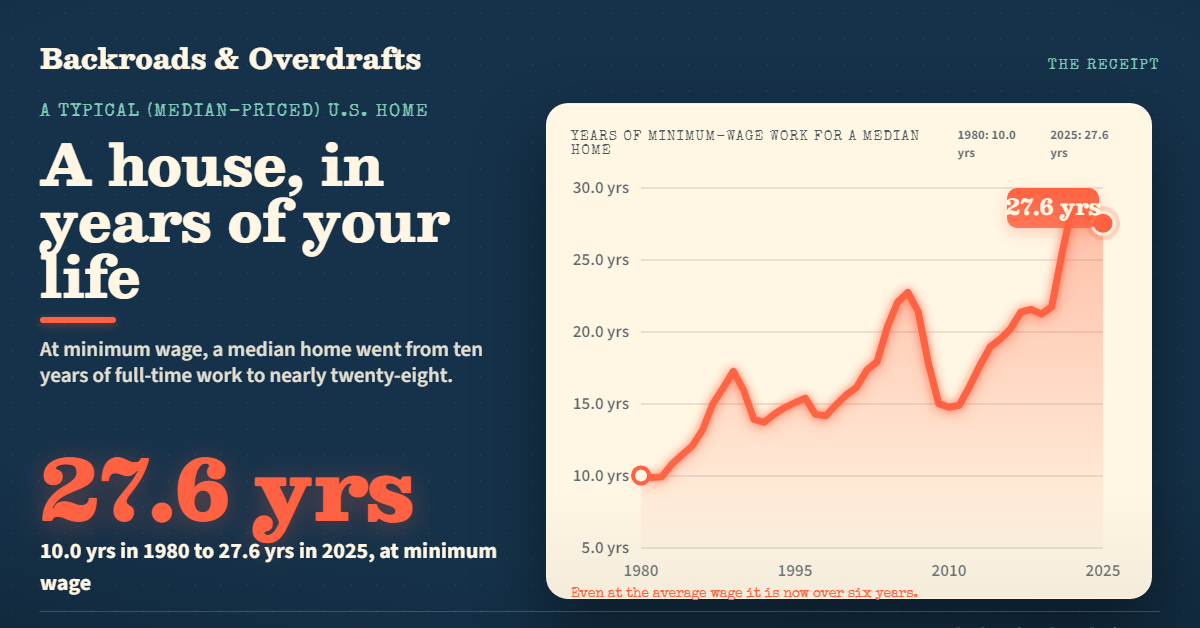
A House Used to Cost 4 Years of Work. Now It Is Closer to 6 and a Half.
Measured in years of full-time work instead of dollars, a typical American home went from about 4.5 years of the average wage in 1980 to 6.4 today, and from 10 years to nearly 28 at minimum wage. The median price climbed from $64,750 to $415,400.
 The Receipt
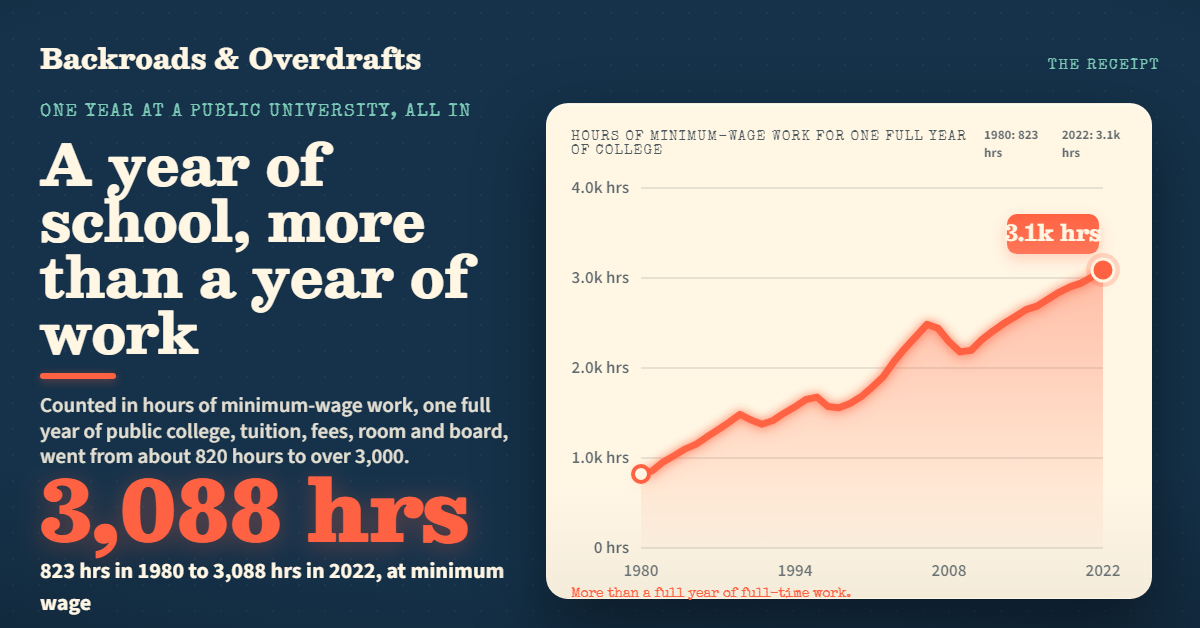
A Year of College Now Costs More Than a Year of Work
Add up everything one year at a public university actually costs, tuition, fees, room and board, and price it in hours of work. It went from about 820 hours of minimum-wage work in 1980 to over 3,000 today. The bill climbed from $2,550 to $22,389.
 The Receipt
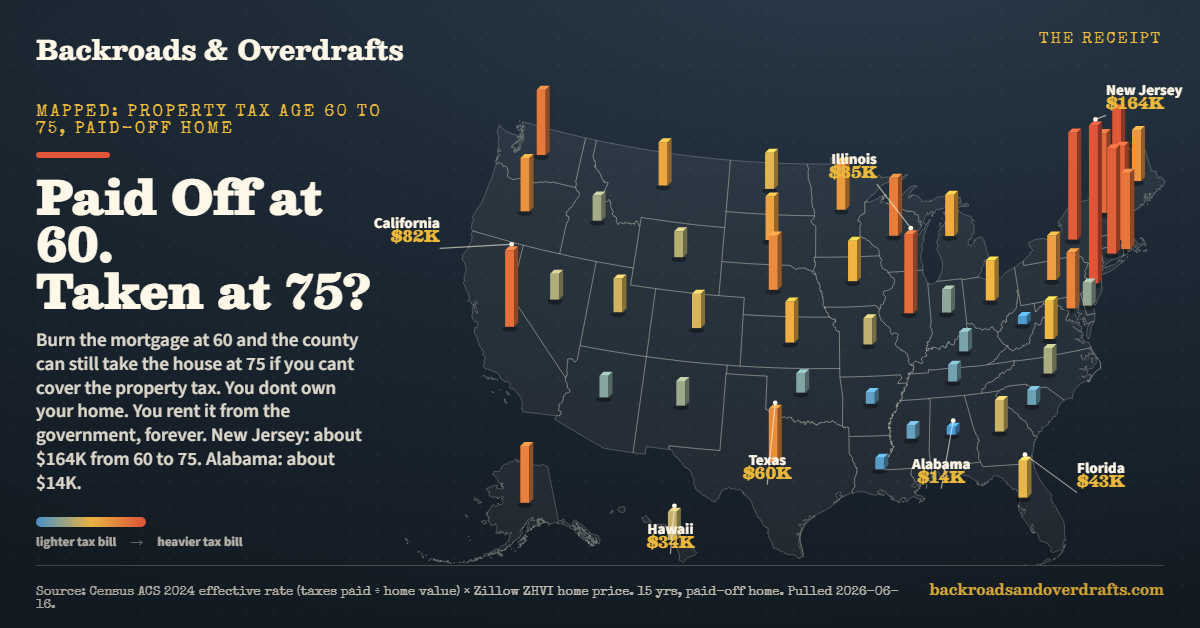
The House Is Paid Off. The Tax Never Is.
Pay off your mortgage at 60 and the county still bills you every year. We mapped what 15 years of property tax costs on a paid-off home in all 50 states. New Jersey, about $164,000. Alabama, about $14,000.