
The Receipt
How Your Coffee Quietly Doubled
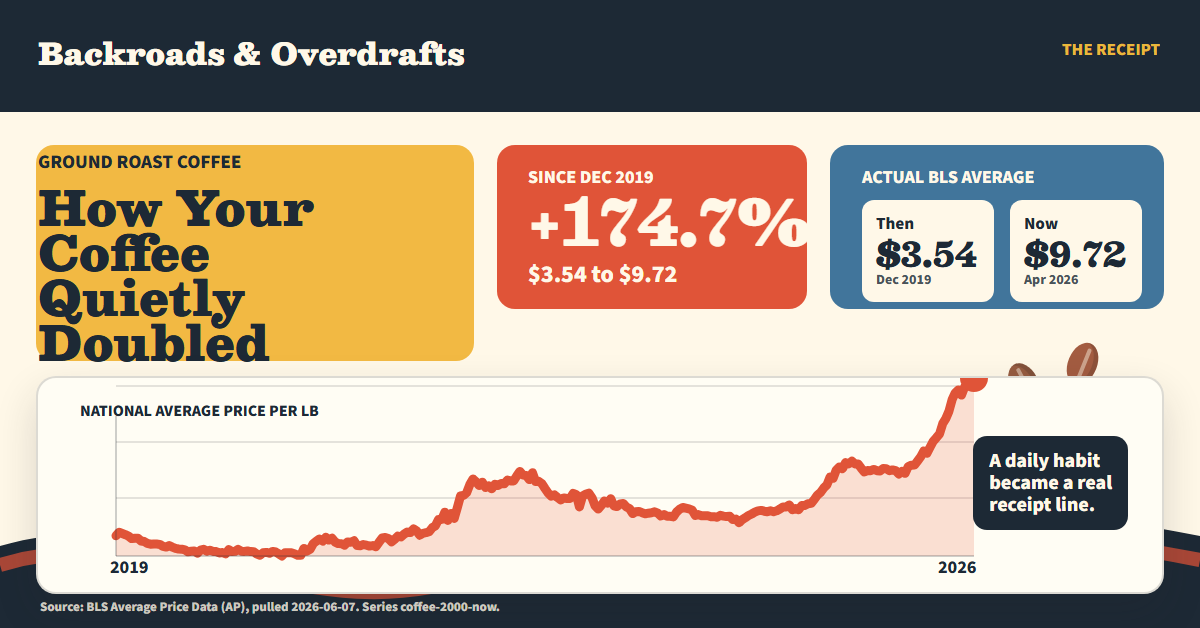
Ground roast coffee went from $3.54 in 2000 to $9.72 a pound. In work-time it now costs more than it did 25 years ago.
Coffee is one of those grocery prices people remember without trying. You may not know what the whole cart cost last month, but you know when the coffee shelf starts feeling rude.
This is not one brand or one store. It is the BLS national average price for ground roast coffee, per pound. That matters, because a canister on the shelf might be a different size, on sale, or a name brand. This is the clean national line underneath all those receipts.
According to the U.S. Bureau of Labor Statistics, in January 2000 ground roast coffee averaged $3.54 per pound. By April 2026, it averaged $9.72 per pound.
That is a 174.7% increase over 25 years.
The part that is not just inflation
Everything costs more over 25 years, so the dollar figure is only half the story. The sharper question is how much of your working time a pound of coffee takes. Using average hourly earnings, here is the answer:
| Year | Price per lb | Minutes of work |
|---|---|---|
| 2000 | $3.54 | about 16 minutes |
| 2019 | $4.05 | about 10 minutes |
| 2026 | $9.72 | about 18 minutes |
Here is the twist. For most of those years coffee got more affordable. In 2000 a pound cost about 16 minutes of work, and by 2019 it had fallen to about 10. Then the recent spike undid all of it. Today a pound of coffee takes more of your working time than it did back in 2000.
The Caveat
BLS average price data is a national U.S. city average. It is not your local store, not a specific canister, and not a brand-name price. The line runs from January 2000 to April 2026, and the work-minutes use national average hourly earnings, so your own wage changes the math.
Still, the direction is not subtle. Same kind of coffee. Same unit. Much bigger habit bill.
Curious what the name brand did? We tracked the real price of a bag of Starbucks Pike Place, by the pound, in A Bag of Starbucks Costs How Much Now?.
What coffee brand did your family always buy?
Why coffee is a good receipt test
Coffee is not the biggest grocery line. It is the one people notice because it sits in the same spot every week and used to feel like a small comfort.
The better way to read the chart is not “coffee got expensive.” It is this:
- If the canister is smaller, compare price per pound.
- If you switched brands, compare the old brand separately from the store brand.
- If you buy pods, do not compare the box price to a bag of ground coffee. Compare cost per cup.
- If you drink coffee every day, small shelf changes stack fast because the habit repeats.
Useful source trail: the price series behind this page is BLS Average Price Data for ground roast coffee, with work-minute context from FRED average hourly earnings. For a broader public doorway into the data, start with BLS CPI data and FRED economic data.
Keep going
If this price check hit the same nerve as your last grocery run, A Bag of Starbucks Costs How Much Now? keeps the receipt math going.
For a cheaper table-level fix, How the House Got Out of Reach turns the same pressure into dinner.
And when you want a break from the numbers, What Really Happened to Egg Prices is the kind of small outing that still works.
Source: U.S. Bureau of Labor Statistics Average Price Data series APU0000717311, Coffee, 100% ground roast, national U.S. city average price per pound, January 2000 to April 2026. Work-minutes use FRED AHETPI, average hourly earnings of production and nonsupervisory workers. Pulled 2026-06-07.
Keep reading
More from The Receipt
 The Receipt
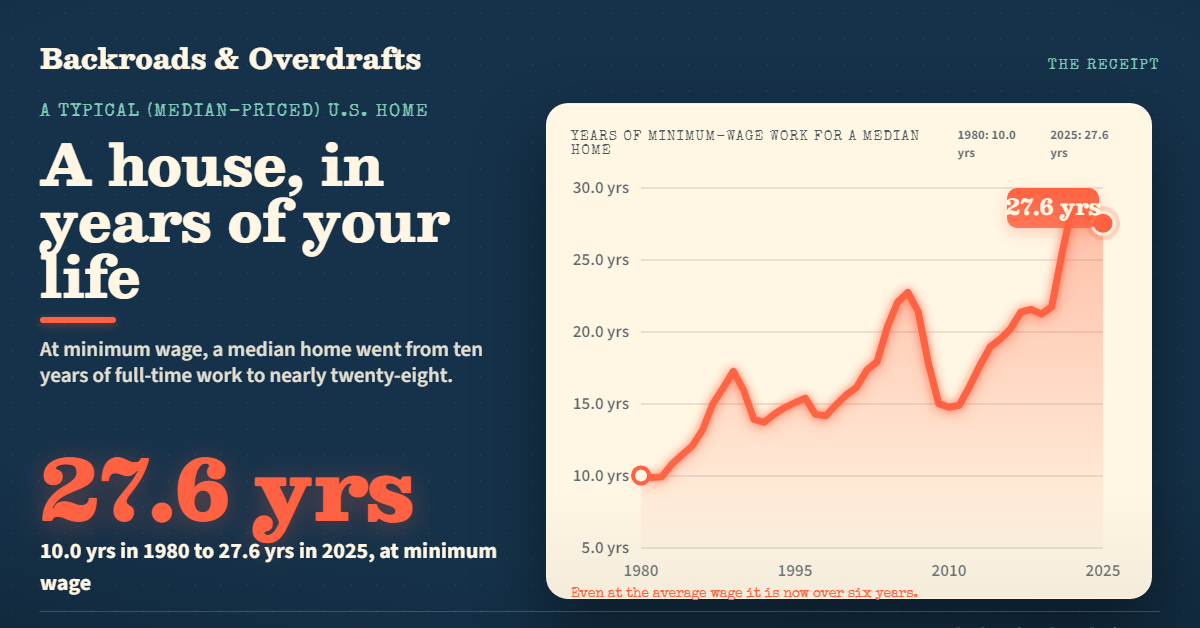
A House Used to Cost 4 Years of Work. Now It Is Closer to 6 and a Half.
Measured in years of full-time work instead of dollars, a typical American home went from about 4.5 years of the average wage in 1980 to 6.4 today, and from 10 years to nearly 28 at minimum wage. The median price climbed from $64,750 to $415,400.
 The Receipt
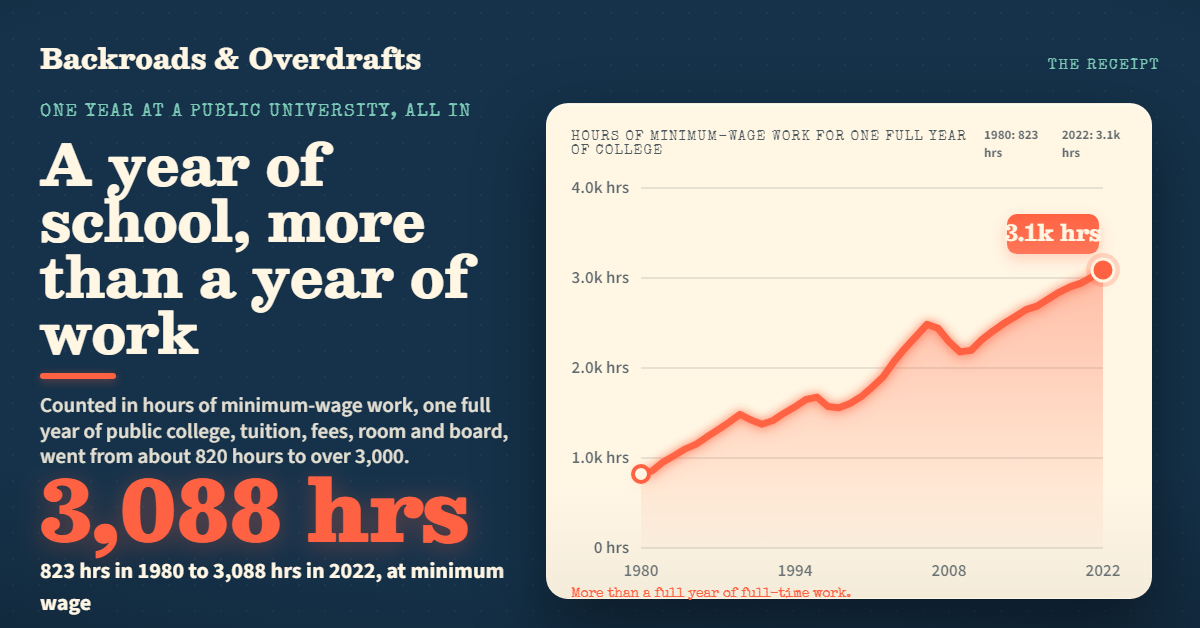
A Year of College Now Costs More Than a Year of Work
Add up everything one year at a public university actually costs, tuition, fees, room and board, and price it in hours of work. It went from about 820 hours of minimum-wage work in 1980 to over 3,000 today. The bill climbed from $2,550 to $22,389.
 The Receipt
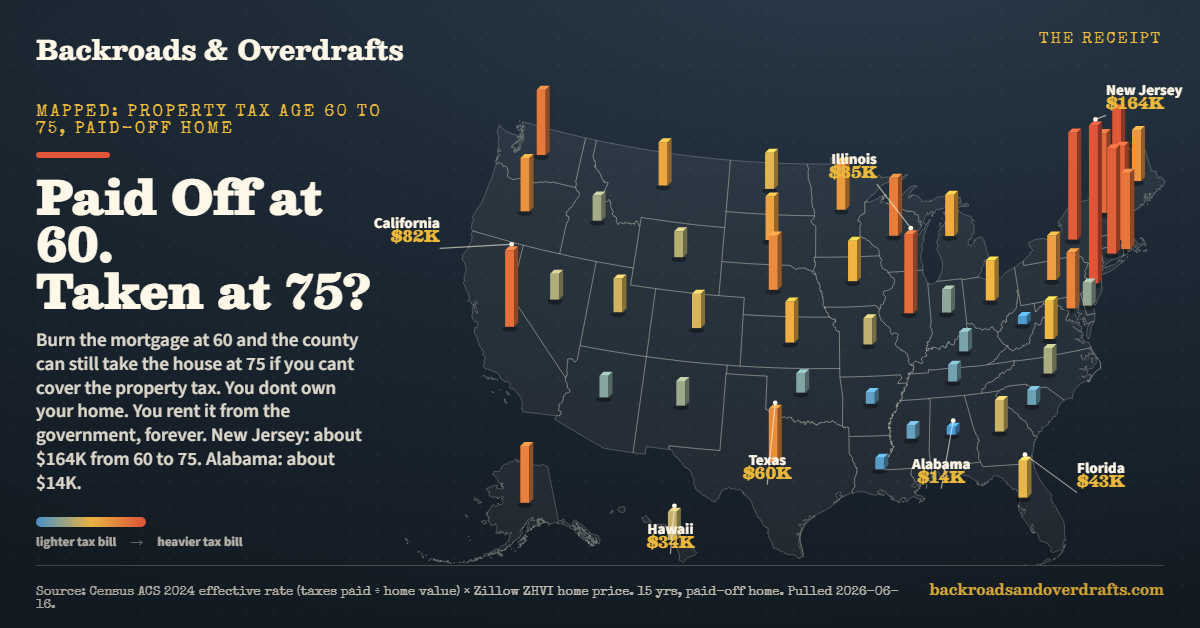
The House Is Paid Off. The Tax Never Is.
Pay off your mortgage at 60 and the county still bills you every year. We mapped what 15 years of property tax costs on a paid-off home in all 50 states. New Jersey, about $164,000. Alabama, about $14,000.