
The Receipt
When Did Fresh Produce Become a Luxury?
A viral rant claimed a single tomato cost $5 and a head of lettuce $9. We didn't trust the numbers, so we pulled live Kroger shelf prices instead. The real ones still sting.
There’s a small moment in the produce aisle that a lot of people are quietly having right now. You pick something up, glance at the tag, and then you check it again. Not because the number is shocking in some cartoon way, but because it’s a little higher than the version of that number you carry around in your head. A tomato. A head of lettuce. The stuff that used to be the cheap, automatic part of the cart.
The thing that set this off online was a rant. Somebody listed it out: a single tomato for $5, lettuce for $9, a cucumber for $2.50, and then the line that traveled, “food is becoming a luxury.” Those exact numbers are not ours, and we wouldn’t put them on a chart. They’re a feeling typed fast, and they’re probably from a pricey store or a different country. So we did the boring thing instead. We pulled live shelf prices.
What the real tag actually says
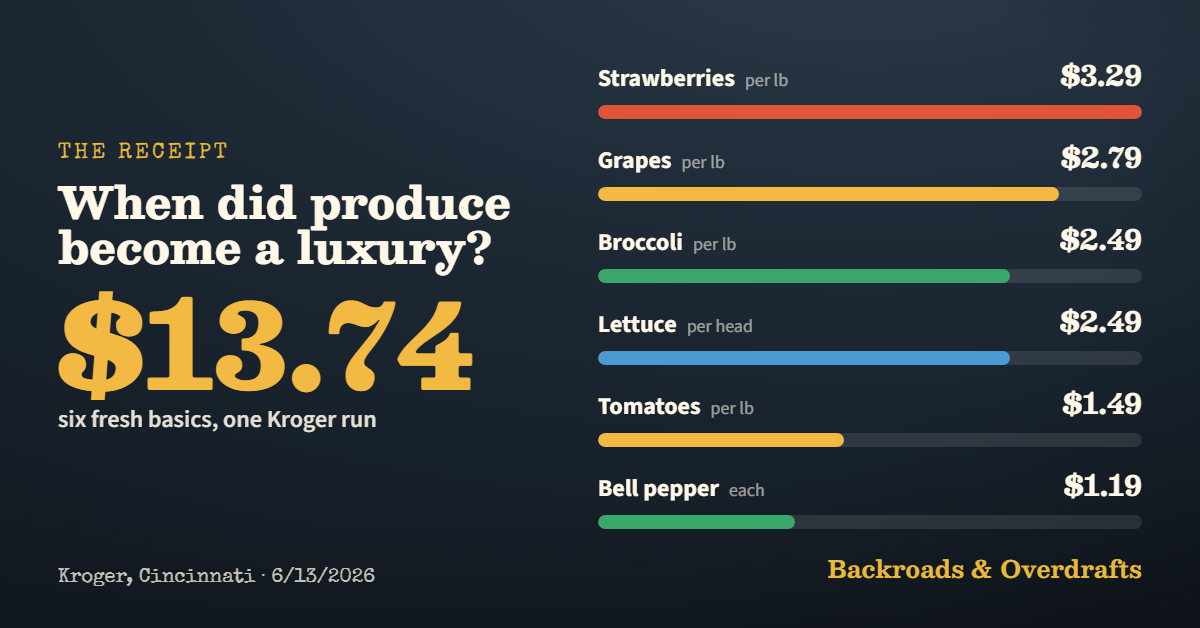
Here’s the cheapest fresh version of each item at a Kroger in Cincinnati, the day we wrote this. No store-brand frozen, no specialty packs, just the plain fresh thing.
- A fresh Roma tomato runs $1.49 a pound. Not five dollars, but a pound is only two or three decent tomatoes.
- A green bell pepper is $1.19 each. One pepper.
- A broccoli crown is $2.49 a pound.
- A wrapped head of iceberg lettuce is $2.49 each.
- Seedless grapes are $2.79 a pound.
- A one-pound clamshell of fresh strawberries is $3.29.
So the rant’s headline number is off. There is no five-dollar single tomato sitting on that shelf. But notice what happens when you actually fill the bag. A pepper, a pound of tomatoes, a head of lettuce, a pound of broccoli, and a pound of grapes is already a touch over nine dollars, and you have not made anything yet. That’s the part the rant got right even with the wrong digits. It’s not one scary tag. It’s that every single tag is a dollar or two more than your gut expects, and they add up at the belt.
Why the unit is the whole trick
The reason produce feels sneaky is the unit. A bell pepper is priced each, so $1.19 lands clean and you know what you’re getting. A tomato is priced by the pound, and a pound is not “a tomato,” it’s a few of them. Strawberries are sold by the clamshell, which reads cheaper per box than per pound until you remember the box is exactly a pound.
When somebody online says “a tomato is five dollars,” they’re usually doing the math we all do at the shelf, picking up a vine bunch or a specialty pack, seeing the total, and dividing it into the feeling instead of the weight. The honest number is lower. The honest number still climbed.
The produce shelf has hidden units
Fresh produce can look cheap until the unit changes under your feet. One price is per pound. Another is each. A bag may be cheaper until half of it softens in the drawer.
Use this little test before the cart gets heavy:
- If it is sold by the pound, weigh what you actually plan to buy.
- If it is sold each, ask how many meals it touches.
- If it is a big bag, be honest about spoilage.
- If frozen is cheaper and the recipe allows it, frozen is not a moral failure. It is dinner.
Produce still matters. The trick is buying the version your week will actually use.
Where this sits on the bigger receipt
None of these are luxury items. That’s the point. They’re the floor of a normal week, the things that used to be the cheap reflex of the cart, and now each one asks for a real decision. That’s the same squeeze we keep finding everywhere else. The whole grocery cart costs a different number than it did a generation ago, the same paycheck buys a different amount depending on which city you’re standing in, and even breakfast does its own quiet math now.
Produce just hides it better, because no single tag is the villain. It’s the sum.
So here’s the question for you, and be honest. What’s the one produce item you used to grab without thinking that now makes you pause and put it back?
Source: Kroger Products API live shelf prices, Kroger On the Rhine (Cincinnati, OH). Cheapest fresh in-store option per item, pulled 2026-06-13.
Keep reading
More from The Receipt
 The Receipt
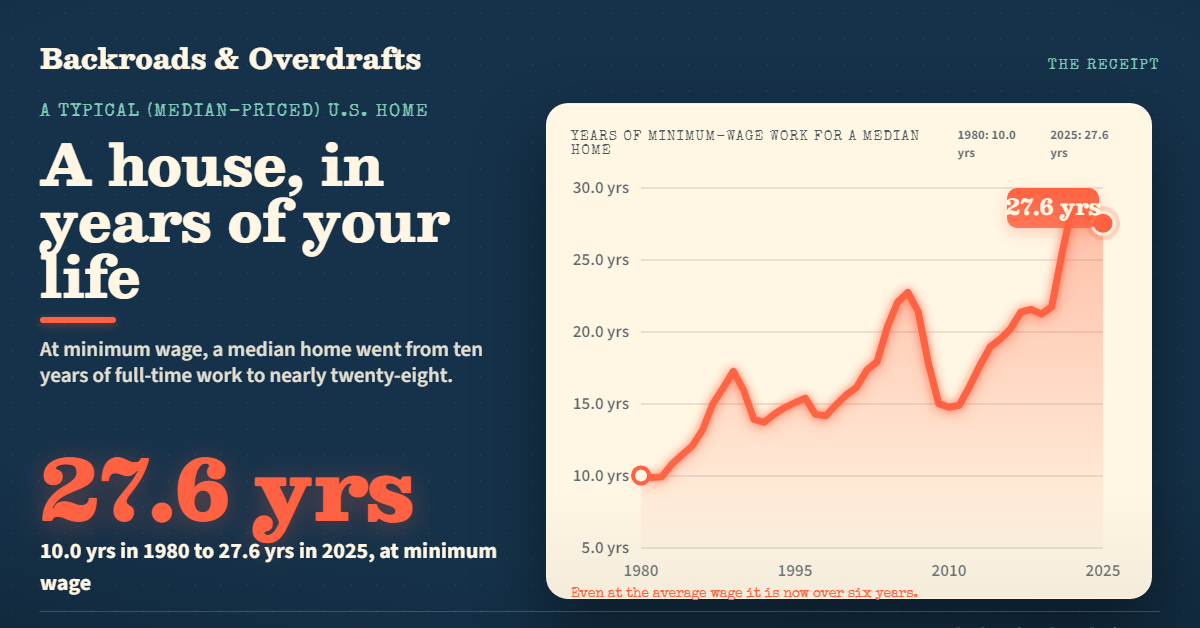
A House Used to Cost 4 Years of Work. Now It Is Closer to 6 and a Half.
Measured in years of full-time work instead of dollars, a typical American home went from about 4.5 years of the average wage in 1980 to 6.4 today, and from 10 years to nearly 28 at minimum wage. The median price climbed from $64,750 to $415,400.
 The Receipt
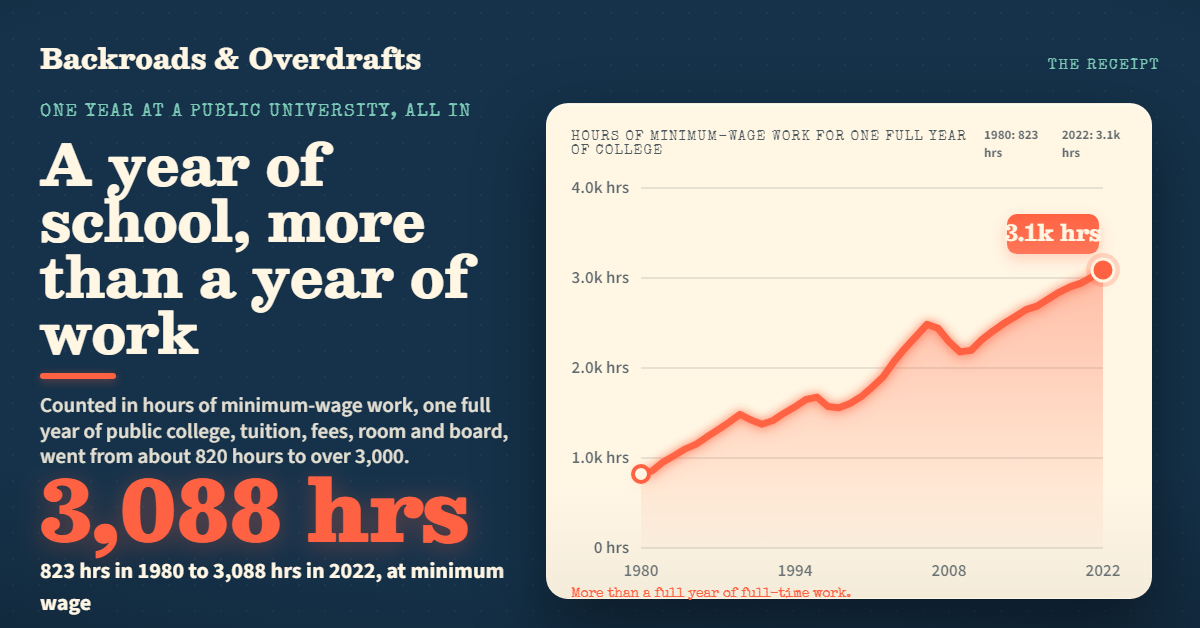
A Year of College Now Costs More Than a Year of Work
Add up everything one year at a public university actually costs, tuition, fees, room and board, and price it in hours of work. It went from about 820 hours of minimum-wage work in 1980 to over 3,000 today. The bill climbed from $2,550 to $22,389.
 The Receipt
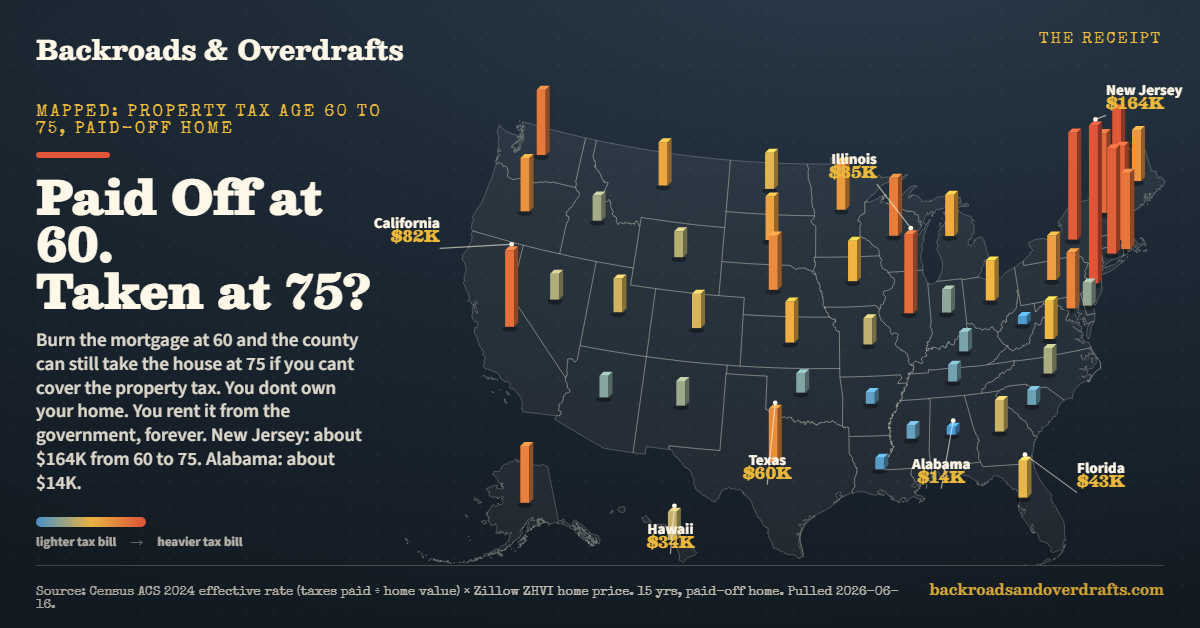
The House Is Paid Off. The Tax Never Is.
Pay off your mortgage at 60 and the county still bills you every year. We mapped what 15 years of property tax costs on a paid-off home in all 50 states. New Jersey, about $164,000. Alabama, about $14,000.