
The Receipt
You Packed Your Lunch and It Still Cost You
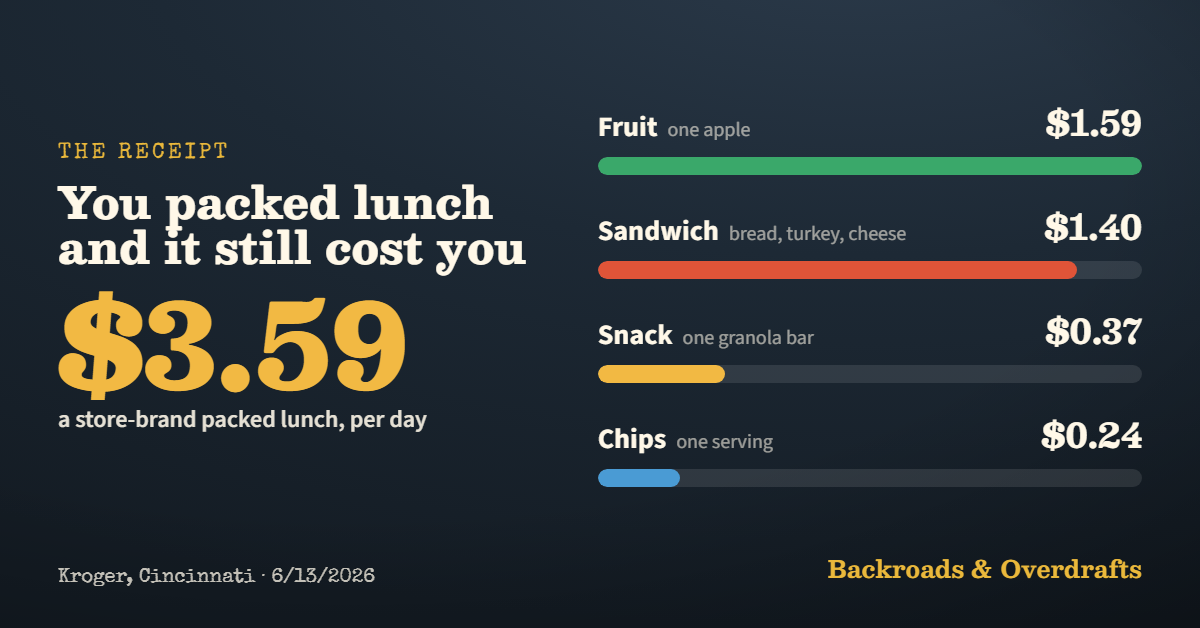
Bringing your own lunch is supposed to be the free win. We added up the cheapest store-brand version at Kroger and a packed lunch still runs about $3.59 a day, with no drink.
You did the responsible thing. You walked past the food trucks, you ignored the deli line, you packed a lunch the night before like a person who has their act together. The whole point was to not spend money. That’s the deal everybody tells you: just bring your lunch and you’ll save a fortune.
So here’s the annoying part. It still cost you something. Not nothing. Not even close to nothing.
The advice to pack your own is so old and so repeated that nobody actually checks the math anymore. It just sits there as common sense, the thing your coworker says when you mention eating out, the thing the budget article leads with. Bring your lunch. As if the bread, the meat, the cheese, the apple all showed up at your house for free.
They didn’t. So we added them up.
The number, and where it comes from
We pulled live shelf prices at a Kroger in Cincinnati on June 13, 2026, and took the cheapest version of every item. Not the nice version. The store-brand, lowest-on-the-shelf version, the one a person who is genuinely trying to save money would actually grab.
A loaf of Kroger white bread was $1.99 for about 20 slices, so two slices for a sandwich works out to about 20 cents. Store-brand sliced turkey was $3.99 for a 9-ounce pack, which is roughly two ounces a sandwich, so call it 89 cents of meat. A pack of Kroger sliced cheese was $2.49 for 8 slices, so one slice is about 31 cents. That sandwich, the cheapest one you can reasonably build, is $1.40.
Then the rest of the bag. A 1-ounce handful from a $1.89 bag of Kroger chips is about 24 cents. The cheapest single apple was a large Gala at $1.59. A store-brand granola bar came out to about 37 cents each in a six-pack.
Add it up and a packed lunch lands at about $3.59 a day.
That’s the floor. No drink. No name brands. Nothing fancy. Just the four things you’d actually put in a lunch, each one the cheapest it gets.
Why $3.59 doesn’t feel like saving
Three dollars and fifty-nine cents sounds small until you live in it. Five days is about $18 a week, and that’s if you nail the cheapest everything every single time, which nobody does. Real life is the Honeycrisp apple instead of the Gala because the Galas looked sad. It’s the name-brand chips because they were on the endcap. It’s the second granola bar because you were hungry. The real number creeps up toward six or seven dollars a day fast, and now you’re closer to the fast-casual lunch you were avoiding than anyone wants to admit.
So the packed lunch isn’t free. It’s just cheaper, and “cheaper” got a lot less cheap. The apple alone, one piece of fruit, costs more than the entire sandwich’s worth of bread. That’s the part that gets you. The produce, the thing that’s supposed to be the humble option, is the most expensive line on the receipt.
This is the same creep we keep finding everywhere. It’s the reason the same grocery cart costs so much more than it used to, and it’s the same quiet math that turned a bag of Starbucks beans into a real expense. None of it is one big jump. It’s 20 cents here and a dollar there until the cheap option isn’t cheap.
The lunchbox audit
Packed lunch is still usually cheaper than buying lunch out. The surprise is that it no longer feels free just because you made it at home.
Try this once on a normal week:
| Lunch part | Receipt trap | Cheaper move |
|---|---|---|
| Main | Deli meat and single-serve packs | Leftovers, tuna, eggs, beans, or chicken bought for dinner first. |
| Snack | Individually wrapped bars and chips | Bulk crackers, fruit, popcorn, or whatever is already open. |
| Drink | Everyday bottles or cans | Water bottle, thermos, or a pitcher at home. |
The win is not a perfect lunch. It is a lunch that does not create a second grocery run.
The point isn’t to stop packing lunch
To be clear, you should still bring your lunch. $3.59 beats $13 at the counter, and it isn’t close. The bring-your-lunch crowd isn’t wrong.
They’re just selling it as a free win, and it isn’t free. It’s a smaller bill, paid at the grocery store instead of the deli, spread out so you don’t feel it land. Same as your coffee that quietly doubled. The money still leaves. It just leaves quietly, two slices of bread at a time.
So the honest version of the advice is this: packing your lunch saves you money, and it still costs you a few bucks a day, and both of those things are true at once. The trick isn’t to feel virtuous about it. It’s to actually know the number, because the number is the only thing that doesn’t lie to you.
What does your packed lunch really run you per day, once you’re honest about the apple?
Source: live shelf prices at Kroger On the Rhine, Cincinnati OH (ZIP 45202), pulled 2026-06-13 via the Kroger Products API. Each item is the cheapest in-store option for that search. Prices vary by store and date.
Keep reading
More from The Receipt
 The Receipt
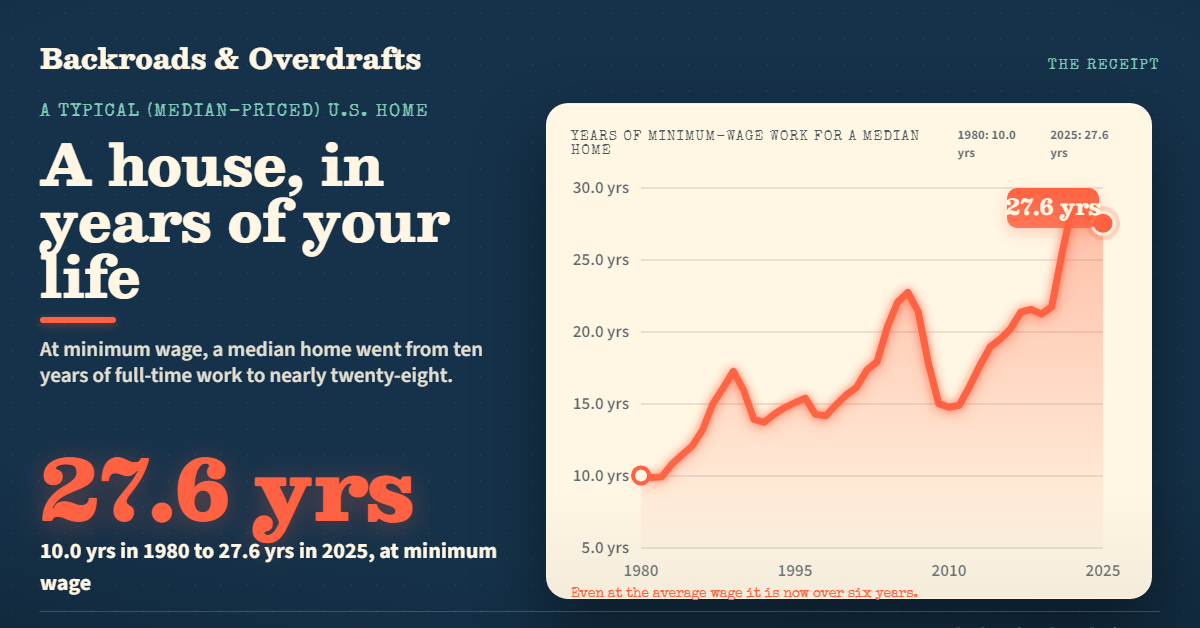
A House Used to Cost 4 Years of Work. Now It Is Closer to 6 and a Half.
Measured in years of full-time work instead of dollars, a typical American home went from about 4.5 years of the average wage in 1980 to 6.4 today, and from 10 years to nearly 28 at minimum wage. The median price climbed from $64,750 to $415,400.
 The Receipt
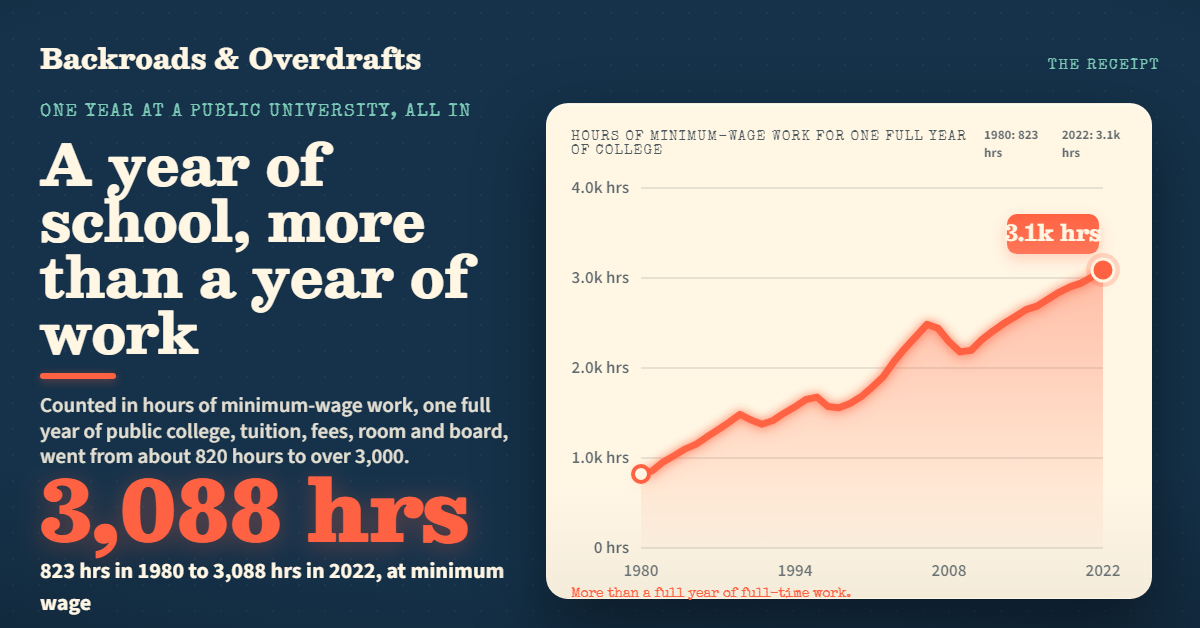
A Year of College Now Costs More Than a Year of Work
Add up everything one year at a public university actually costs, tuition, fees, room and board, and price it in hours of work. It went from about 820 hours of minimum-wage work in 1980 to over 3,000 today. The bill climbed from $2,550 to $22,389.
 The Receipt
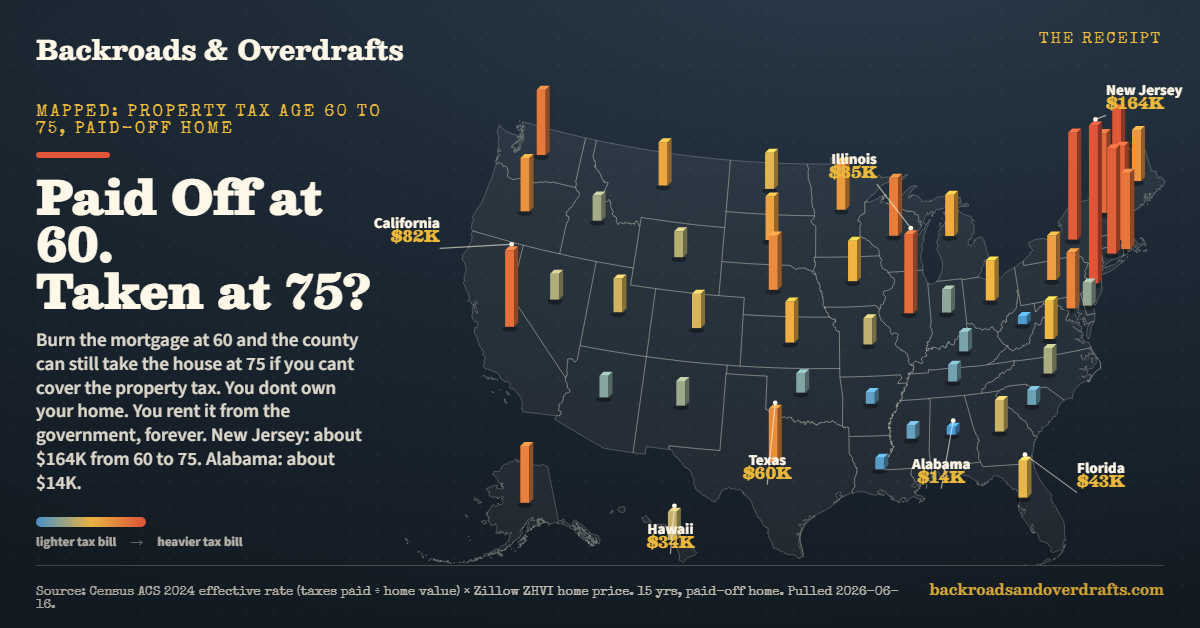
The House Is Paid Off. The Tax Never Is.
Pay off your mortgage at 60 and the county still bills you every year. We mapped what 15 years of property tax costs on a paid-off home in all 50 states. New Jersey, about $164,000. Alabama, about $14,000.