
Stretch-It Kitchen
The Cheapest Foods in the Store Are Never on the Endcap
A budget grocery list built on the cheap, filling, versatile staples that actually stretch a dollar, with live Kroger store-brand prices and the cost per serving behind each one.
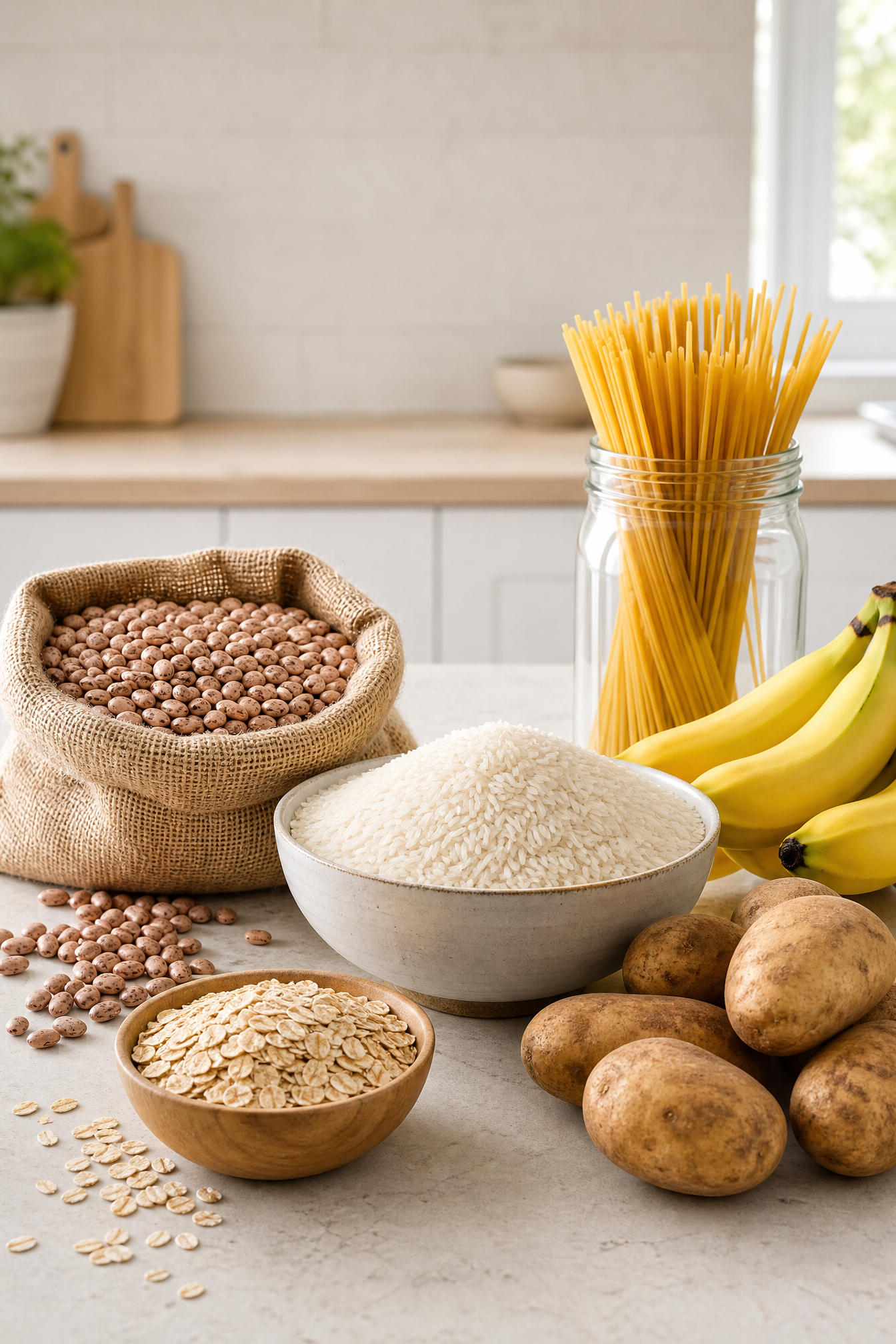
You can usually spot the trap on the way in. The endcap by the door is stacked with the thing on sale this week, a snack box or a sauce or a frozen meal with a yellow tag that says you are saving money. Maybe you are, against its own normal price. But the genuinely cheap food, the food that fills people up for almost nothing, is never the stuff they build a display around. It is the boring bags and cans on the bottom shelf in the back, and nobody puts a balloon on those.
I think about that every time I am standing in the aisle doing the quiet math, the cart half full, trying to figure out what actually stretches. So here is the honest version of that list. Not a meal plan, not a challenge, just the staples worth building a cart around, with the real Kroger store-brand price next to each one and, where it matters, what a single serving actually costs. Every number here came off the shelf at one store on one day, so treat them as a map, not a promise.
What actually stretches a dollar
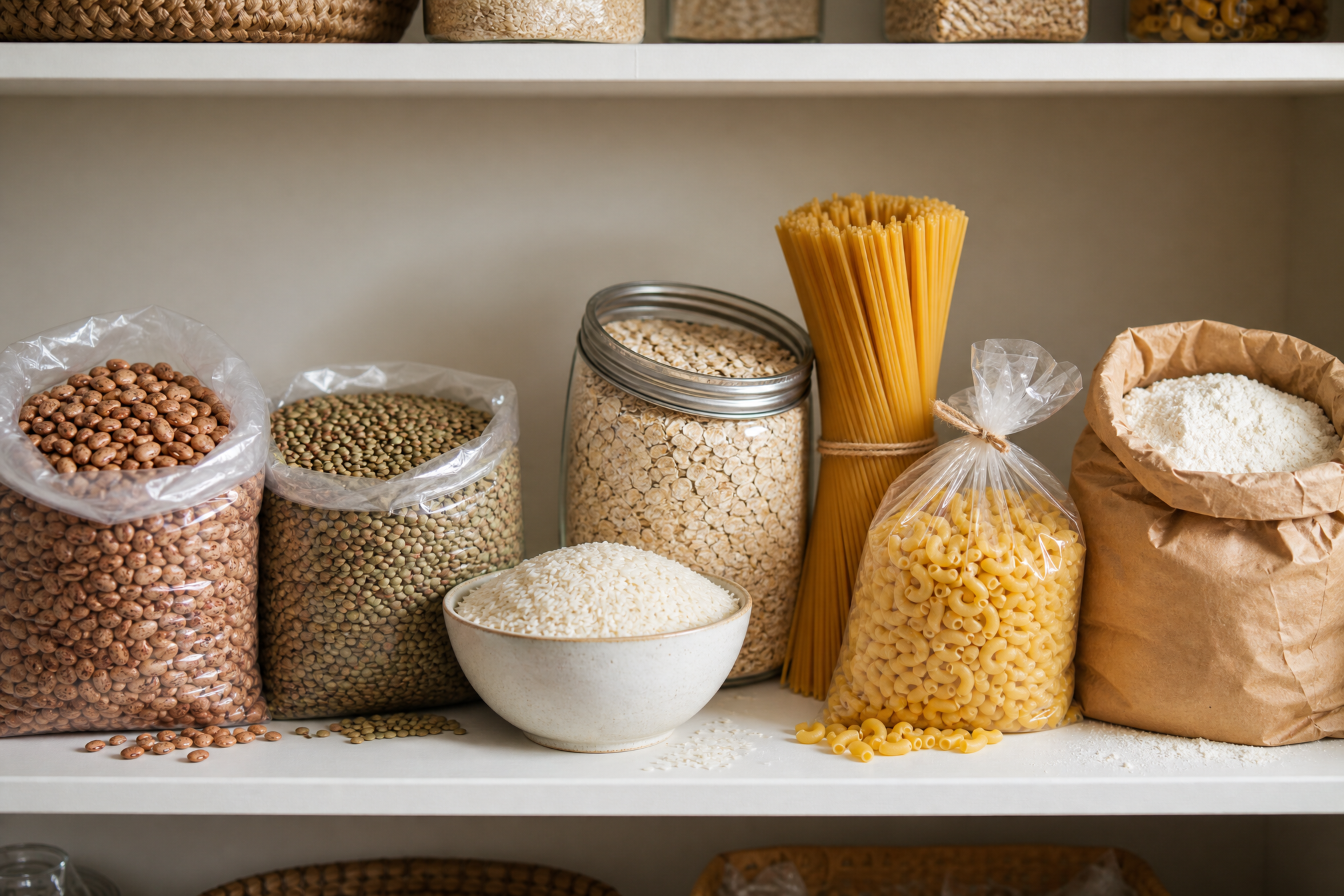
These are grouped by what they do for you, because that is how you cook from them. The price is the cheapest store-brand version on the shelf the day I looked.
The fillers that cost almost nothing per plate
These are the floor of the whole cart. Buy them first.
- Long-grain white rice, $1.79 for a 2-pound bag. A 2-pound bag is roughly eighteen cooked half-cup servings, which lands the rice itself at about a dime a serving. This is the single cheapest way to put something filling on a plate.
- Dried pinto beans, $1.19 a pound. One bag cooks down to a dozen-plus servings, so you are under a dime a serving for a real source of protein and fiber. If tonight is a tired night, the canned version is $1.00 for a 15.5-ounce can and you skip the soaking. Both are cheap. The one that actually gets cooked is the right one.
- Dried lentils, $1.69 a pound. No soaking, done in under half an hour, and a pound makes around a dozen servings. They do the bean job on the nights you forgot to plan.
- Old fashioned oats, $2.79 for an 18-ounce canister. That canister is about thirteen bowls of breakfast at roughly 21 cents each, which is the part of the day everyone forgets to price out.
- Spaghetti and elbow macaroni, $1.25 a pound each. Plain dry pasta is around fifteen cents a serving and it is the base of a dozen different cheap dinners.
- All-purpose flour, $1.69 for a 2-pound bag, or $2.59 for 5 pounds. Pancakes, a pan of biscuits, a flatbread, the dredge for the chicken below. Cents per use.
The cheap produce that earns its spot
Fresh does not have to mean expensive if you stick to the unglamorous stuff.
- Bananas, $0.69 a pound. Still one of the cheapest things in the produce section, and the only one most kids ask for by name.
- Russet potatoes, $0.99 a pound. Filling, endlessly flexible, and they keep for weeks in a cool dark spot.
- Yellow onions, $0.99 a pound. Not a meal, but the thing that makes the cheap meals taste like something. Almost everything below starts with an onion.
- Carrots, $1.39 for a 16-ounce bag. They last, they go in everything, and a bag is a few cents a serving.
- Green cabbage, $0.99 a pound. Pound for pound one of the best deals in the store. One head turns into slaw, a stir-fry, a soup, or a pan of cheap fried cabbage and stretches across several meals.
- Frozen mixed vegetables, $1.29 for a 12-ounce bag. When fresh is pricey or about to spoil, frozen is cheaper, already cut, and does not rot in the drawer while you mean to use it.
The proteins and fats that make it feel like food
A pile of starch is not dinner. These are the cheap add-ons that turn it into one.
- Large eggs, $1.99 a dozen. That is about 17 cents an egg. A fried egg on top turns rice, potatoes, or a bowl of noodles into an actual meal.
- Bone-in chicken thighs, $1.99 a pound. The store-brand bone-in thigh is the cheap-protein workhorse. It is darker, more forgiving than breast, and a couple of pounds feeds a family with leftovers.
- Peanut butter, $2.29 for a 16-ounce jar. Protein, fat, and calories that keep on a shelf. A jar is a week of cheap lunches before you have to think about it.
- Canned diced tomatoes, $1.00 a 14.5-ounce can. The cheapest way to turn beans, pasta, or rice into something with sauce and flavor instead of just bulk.
- Flour tortillas, $1.99 for a 10-count. About 20 cents each, and the wrapper around a dozen cheap dinners.
If you want one number to carry out of here: the rice, the beans, and the eggs together are the cheapest filling, complete-ish plate in the building, and not one of them was ever on sale, because they never have to be.
How to build meals out of this list
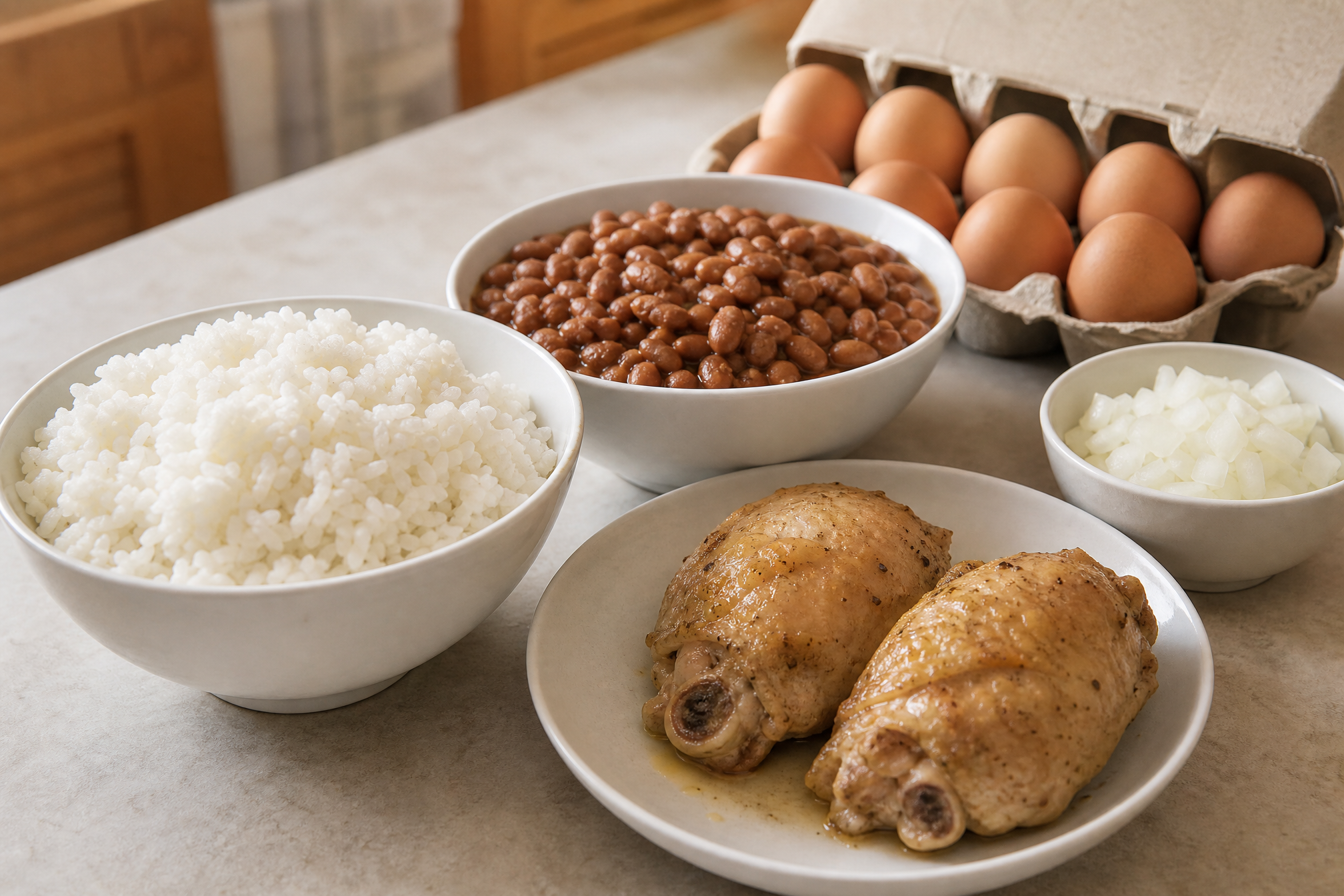
A list is not dinner. The reason these specific items earn the cart space is that they cross over, so one cheap ingredient shows up in three different meals instead of one.
- Rice plus beans plus an onion is the anchor. Season it hard, finish it with something bright, and you have a dinner for pocket change. The full breakdown lives in the link below.
- Pasta plus canned tomatoes plus an onion is a five-minute sauce that costs less than a dollar to feed the table.
- Chicken thighs plus potatoes plus carrots is a sheet-pan dinner, one pan, no fuss, real meat.
- Eggs plus a tortilla plus whatever is in the fridge is breakfast for dinner, the cheapest reset there is.
- Cabbage plus an onion plus a little of the chicken is a big skillet that stretches a small amount of meat across a whole pan of food.
- Oats plus a banana plus a spoon of peanut butter is breakfast for under fifty cents while everyone else is buying $7 cereal.
The move that makes it work is cooking the cheap part once in a big batch. A pot of beans, a tray of chicken, a pot of rice on Sunday, then those become bowls, tacos, and soup across the week. You pay the cheap price one time and let it turn into several dinners.
Where the numbers come from
Every price here is a live Kroger store-brand shelf price pulled at Kroger On the Rhine in Cincinnati on June 22, 2026, using the cheapest store-label version on the shelf that day. We never type a price from memory. If you want to sanity-check grocery costs against the official record, the Bureau of Labor Statistics average price data tracks national prices for many of these same staples over time.
For the longer story behind a few of these, beans and rice still feed a person for pocket change, and the five-dinners-from-one-grocery-run plan is this list turned into an actual week. If you want the receipt on why the meat aisle keeps fighting you, cheap protein is not as cheap as it used to be, which is exactly why the bag of beans and the dozen eggs matter more than they did a few years ago. And if it feels like even the carrots have gotten expensive, you are not imagining it, because produce quietly became a luxury.
What is the one cheap staple you always have in the house, the one your whole list gets built around?
Prices are live Kroger store-brand shelf prices at Kroger On the Rhine, Cincinnati, pulled 2026-06-22. Your store and your day will vary.
Keep reading
More from Stretch-It Kitchen
 Stretch-It Kitchen
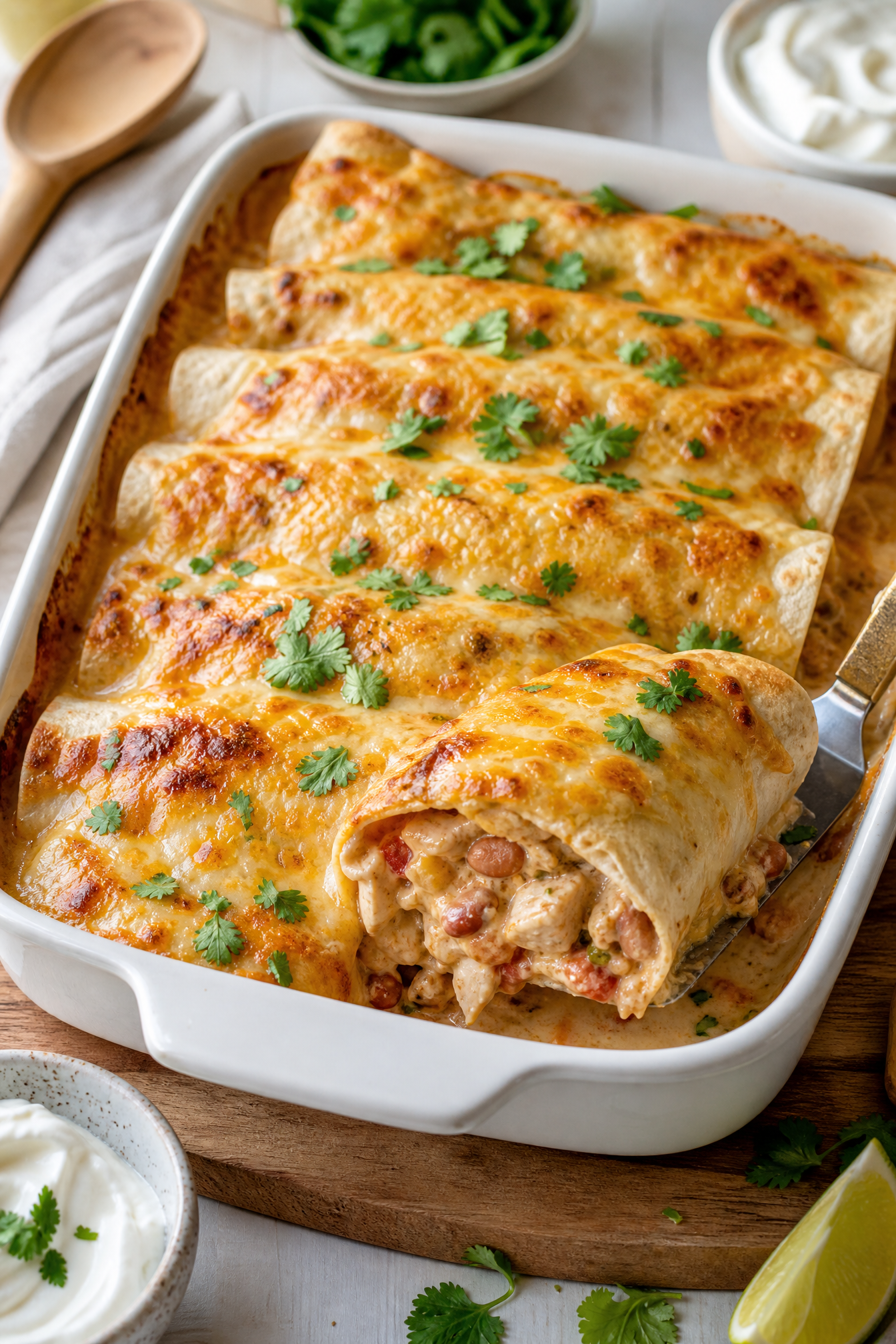
The Chicken Enchiladas That Cost Less Than the Drive-Thru
A pan of high-protein chicken enchiladas, six rolled and baked, for under nine dollars and about a dollar fifty each. Priced with live Kroger numbers and built to actually fill you up.
 Stretch-It Kitchen
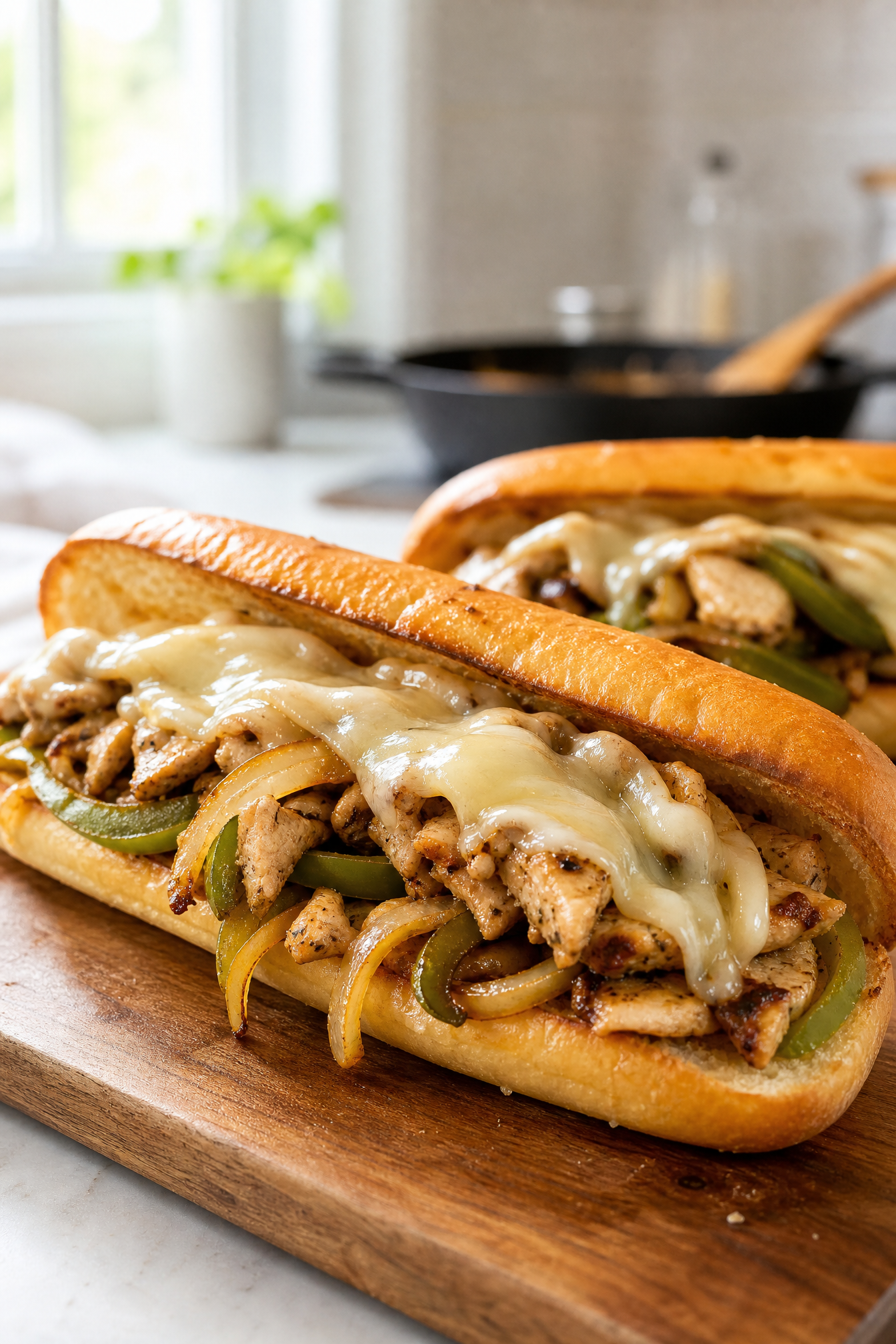
Chicken Philly Cheesesteaks Beat the $13 Sandwich Shop
A loaded chicken Philly with peppers, onions, and melted provolone runs about three dollars a sandwich at home. Priced with live Kroger numbers.
 Stretch-It Kitchen
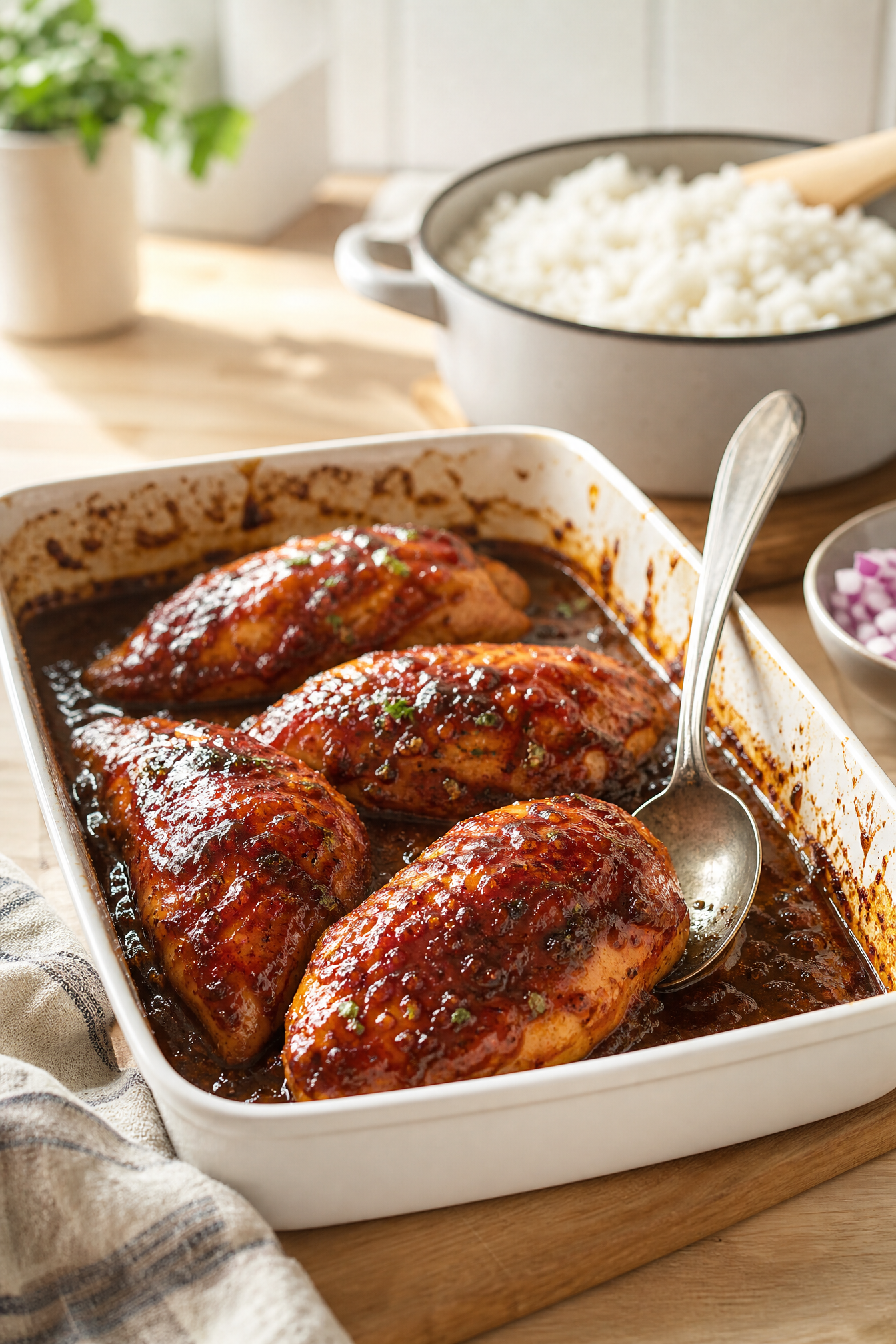
Honey BBQ Chicken and Rice That Feeds Four for Under $10
Chicken breasts baked in a honey-barbecue sauce over a pot of long-grain rice, four plates for about $9.69. Priced with live Kroger store-brand numbers, with the one ingredient quietly running up the bill.